
Discover the magic of Corpus Christi in Cusco, a vibrant festival where ancient Andean traditions blend seamlessly with Catholic faith. This celebration offers a unique window into the soul of the Imperial City. Experience its rich history, witness majestic processions, and taste the iconic Chiri Uchu. This guide invites you to explore an unforgettable Cusco cultural event.
Understanding Corpus Christi in Cusco
Corpus Christi in Cusco transcends a simple religious observance. It is a profound expression of our heritage. This festival beautifully intertwines deep Catholic faith with the rich cultural legacy of the Andes. Held 60 days after Easter, typically in late May or early June, it stands as a living testament to centuries of history and traditions. These customs pass down through generations. This experience not only reflects our identity but also invites visitors to immerse themselves in the magic of Cusco. It is a city where past and present converge on every cobblestone street.
Historical Context of Corpus Christi in Cusco
The roots of Corpus Christi in Cusco trace back to 1573. Viceroy Francisco de Toledo introduced it. His aim was to consolidate religious conquest after the fall of the Inca Empire. This event dramatized the triumph of Spanish Catholicism over Inca beliefs. Yet, its timing coincided with Andean festivals like Inti Raymi and the winter harvest. This allowed for a unique fusion. During the Inca era, mummified remains of emperors and sacred objects paraded through plazas. This tradition integrated into Corpus Christi, shaping its defining syncretism. Today, this festival vibrantly reflects our identity. It combines Catholic rituals with Andean spirituality. This spectacle captivates both locals and visitors. You can delve deeper into the city’s past with a Cusco City Tour.
Descriptions and Traditions of Saints and Virgins
Virgins
- Santa Bárbara: From the district of Poroy, her image portrays a young, modest woman. She stands as the revered patron saint of artillerymen. Santa Bárbara also offers protection against lightning.
- Santa Ana: This figure depicts an elderly woman tenderly holding the child Virgin Mary. She is especially cherished as the patroness of chicheras (corn beer brewers) and expectant mothers.
- Virgen de la Natividad: This image represents the Virgin Mary with the infant Jesus. It holds a unique distinction: it is the only image without additional clothing placed over its carved garments.
- Virgen de Los Remedios: She is widely regarded as the patron saint of herbalists. She also protects practitioners of natural medicine.
- Virgen Purificada: Also known as the Virgin of Candelaria. She gracefully holds the baby Jesus in one arm. A candle illuminates her other hand.
- Virgen de Belén: This image boasts the most intricate adornments of jewels. Alongside San Cristóbal, she carries one of the heaviest andas (platforms).
- Virgen Inmaculada Concepción: Affectionately known as «La Linda» (The Beautiful One). She is notably distinguished by the moon and stars at her feet. This figure is a highlight of the religious processions Cusco offers.
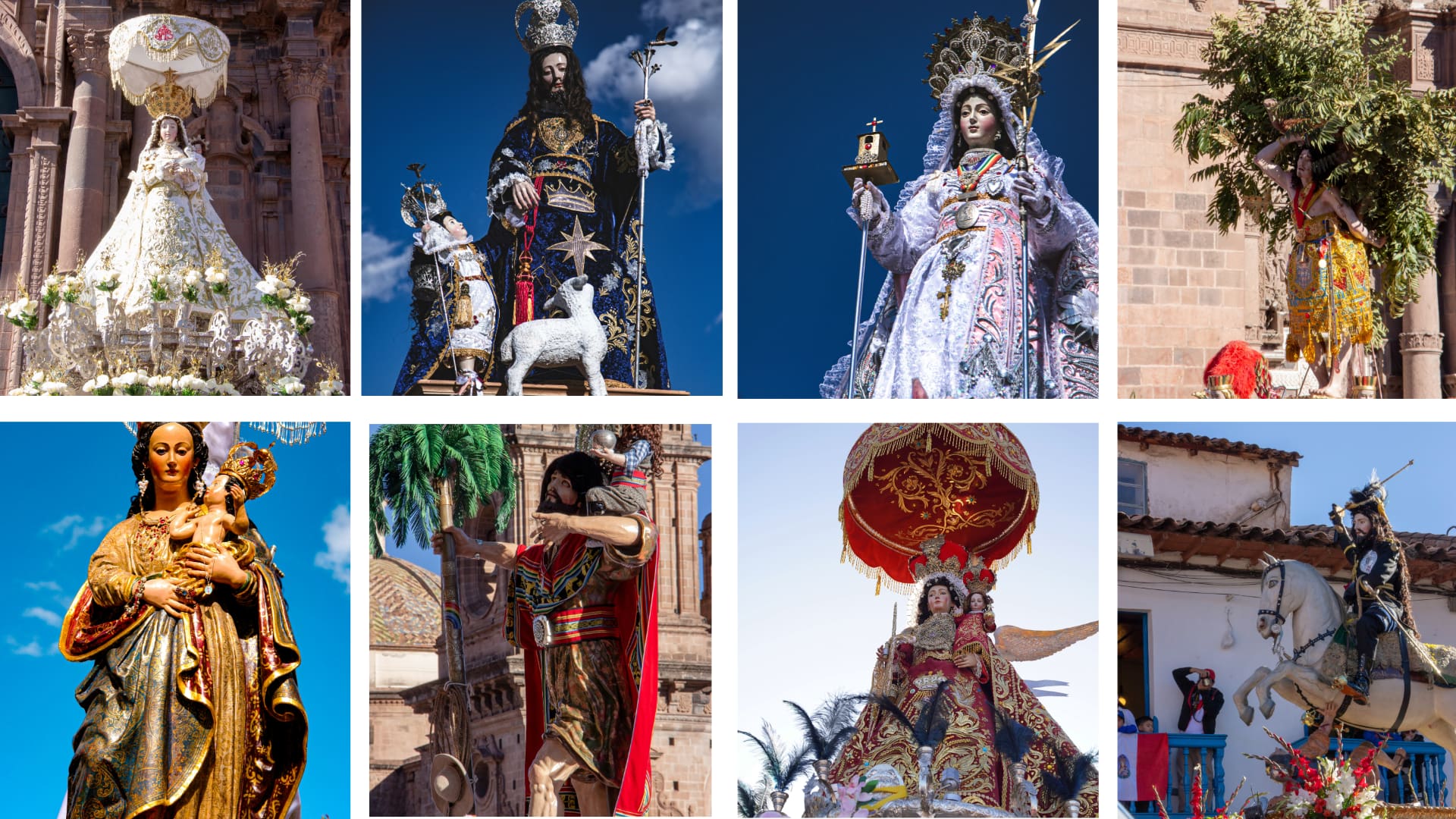
Saints
- San Antonio Abad: This sacred image traditionally leads the procession into the grand cathedral. A small boar accompanies the figure. Notably, only married men are entrusted with carrying its litter.
- San Jerónimo: You will see this saint cloaked in distinctive red attire. This vibrant color symbolizes a nearby mountain of red clay, a site once honored before the arrival of colonization.
- San Cristóbal: This revered figure undertakes the most demanding journey during the festivities. His procession involves navigating challenging steep inclines. The rhythm of his carriers can be quite erratic, showcasing their competitive devotion.
- San Sebastián: Devotion guides the barefoot carriers of this image. Historically, the saint’s accompanying tree even featured live parrots.
- Santiago Apóstol: During colonial times, this was the foremost saint. His image strikingly shows him mounted on a white horse. He wields a saber, triumphing over an enemy. This vibrant display reflects the historical Cusco cultural events.
- San Blas: Easily recognized by his red gloves and priestly vestments. A group of altar boys often surrounds him.
- San Pedro: The carriers of this saint employ a unique, rhythmic pace. This movement creates the beautiful illusion of a dancing image.
- San José: His depiction features him holding the hand of the child Jesus. Tradition suggests that single men who carry his litter may soon find marriage.
Chiri Uchu: The Culinary Heart of Corpus Christi in Cusco
Our culinary traditions form a fundamental pillar of Corpus Christi in Cusco. The Chiri Uchu stands as its most emblematic dish. Its name comes from the Quechua words «chiri» (cold) and «uchu» (spicy). This means «cold and spicy food». Its origins trace back to the Inca era. It possibly represents Andean duality, where foods from the earth and surface combine. Or it arose from the Ayni system. This reciprocity mechanism fostered ingredient exchange. Products came from the coast, highlands, and jungle.
Ingredients and Cultural Significance
The Chiri Uchu includes guinea pig, roasted chicken, charqui (dried meat), sausage, cheese, seaweed, fish roe, and a cornflour tortilla (torreja). It also features toasted corn grains (cancha). All ingredients are served cold. This dish delights the palate. It also narrates our cultural fusion. It unites ingredients from all over Peru in one harmonious plate. During Corpus Christi in Cusco, Plaza San Francisco fills with stalls. Vendors serve Chiri Uchu. This attracts crowds seeking to savor this traditional delight. This unique blend makes it a must-try traditional Peruvian food Cusco. Consider sampling Chiri Uchu after an immersive Sacred Valley Tour Full Day.
An Invitation to Experience Cusco
Beyond the procession and food, we engage in traditions that make Corpus Christi in Cusco a unique experience. The «Bajada» of the saints, their return to their churches, adds a final touch of reverence. For us, Corpus Christi is more than a religious event. It is a celebration of our identity. It fuses faith, culture, and community in a deeply moving way.
For those considering visiting Cusco, Corpus Christi offers an unparalleled opportunity to experience our living heritage. The streets come alive with color, music, and devotion. This provides a sensory feast, both spiritual and cultural. Whether you join the procession, try Chiri Uchu in Plaza San Francisco, or simply observe the vibrant atmosphere, you will immerse yourself in a celebration cherished for centuries.
We invite you to join us in Cusco during Corpus Christi in 2025 to witness this extraordinary fusion of faith, culture, and tradition. It is an experience that will leave you with indelible memories and a deeper appreciation for the rich tapestry of Andean life. Enhance your cultural immersion by exploring Do you know the museums of Cusco?. A Cusco City Tour will further illuminate the historical context of these vibrant traditions.