
Discover the vibrant Inti Raymi Festival in Cusco, a spectacular event where ancient traditions meet modern celebration. This blog explores the history, profound rituals, and what you can expect from this incredible Andean culture festival. Experience the heart of Cusco traditions as we honor Inti, the Sun God.
The Enduring Legacy of Inti Raymi
We, the people of Cusco, proudly celebrate the Inti Raymi Festival Cusco, one of the most significant traditions of the Inca Empire. This festival continues to resonate deeply within our cultural identity. Held annually on June 24th, this event marks the winter solstice in the Southern Hemisphere. It also signifies the Inca New Year, honoring Inti, the Sun God, the most revered deity in Inca religion. This celebration is a testament to our history and traditions, passed down through generations.
Historical Context of Inti Raymi
The Inti Raymi Festival Cusco has its roots in the 15th century. The Sapa Inca Pachacútec, the architect behind the Tahuantinsuyo expansion, instituted it around 1430. This information comes from the chronicles of Inca Garcilaso de la Vega. This festival, observed during the winter solstice, was the most important event in the Inca calendar. It marked the moment when the sun, considered the source of life, began its return to Earth. Historians like John H. Rowe suggest Inti Raymi was both a religious ceremony and a political act. It reinforced the Sapa Inca’s divine authority, as he was seen as a direct descendant of Inti. María Rostworowski, another notable historian, emphasizes the festival’s role in integrating diverse ethnicities through shared rituals. This strengthened social cohesion within the empire.
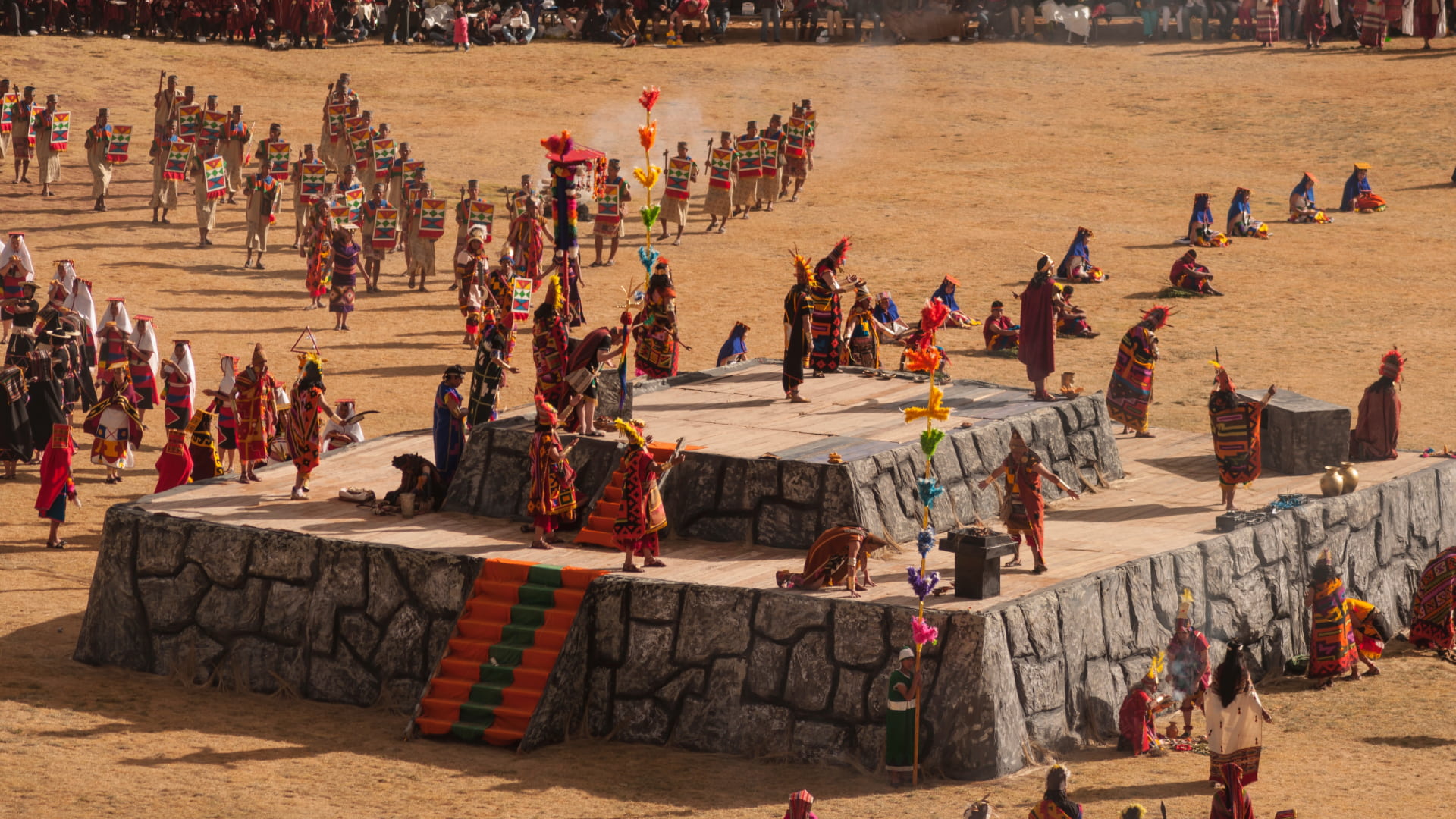
The Viceroy Francisco de Toledo prohibited the festival in 1572. He deemed it a pagan practice incompatible with Catholicism. Despite this suppression, indigenous communities secretly maintained elements of Inti Raymi. They preserved its essence through oral traditions. In 1944, Faustino Espinoza Navarro, a Quechua writer and scholar, revived the festival as a theatrical representation. He based this on Garcilaso de la Vega’s chronicles, with help from historian Humberto Vidal Unda. This reconstruction, now celebrated in Sacsayhuamán, has transformed Inti Raymi into a world-renowned cultural event. It was declared Cultural Heritage of the Nation in 2001. A Cusco City Tour can provide a deeper understanding of the city’s historical layers.
Rituals and Traditions of Inti Raymi
Historically, Inti Raymi was a nine-day celebration. It began with a purification period. Participants would fast, consuming only white corn and a herb called chucam, as noted by Garcilaso de la Vega. On the main day, June 24th, the Sapa Inca led a procession. This went from Coricancha, the Temple of the Sun, to Haukaypata (the current Plaza de Armas). Here, he offered chicha de jora, a fermented corn liquor, to Inti. Rituals included llama sacrifices, coca leaf readings, and diverse dances representing the empire’s regions. Participants wore costumes symbolizing different parts of Tahuantinsuyo.
Modern Inti Raymi Celebrations
Today, the modern Inti Raymi Festival Cusco unfolds across three main stages:
- Coricancha: This is the initial ceremony. It features offerings and rituals that recreate the ancient sun worship. It lasts approximately 45 minutes. This is a key part of the Inca rituals.
- Plaza de Armas: A public procession takes place here. It includes traditional dances and music, and it is free to watch. This stage lasts about 1 hour. Witnessing this part provides an amazing Cusco cultural experience.
- Sacsayhuamán: This is the main theatrical representation. Over 800 actors participate, including the Sapa Inca and priests. This grand spectacle lasts approximately 2 hours. Exploring this site is a highlight of any Sacsayhuaman events calendar.
The modern celebration, while theatrical, aims to capture the essence of the original festival. Actors wear elaborate costumes adorned with gold and silver ornaments. These represent the Inca hierarchy. Along with traditional instruments like pututus (conch shells) and drums, evoke the splendor of Tahuantinsuyo. Animal sacrifices are now simulated symbolically. This maintains the connection to ancestral practices.
Cultural and Political Significance
Inti Raymi was more than a religious celebration. It reinforced the social and political structure of the Inca Empire. According to Garcilaso de la Vega, the festival had three main objectives: thanking Inti for the harvest, honoring the first Incas (Manco Cápac and Mama Ocllo, considered children of the sun), and celebrating the unity of the Inca people. Rostworowski highlights Inti Raymi’s role in resource redistribution. It also strengthened reciprocity relationships (Ayni), a pillar of the Inca economy. Rowe, in turn, emphasizes the Incas’ astronomical knowledge. They precisely calculated the solstice to align agricultural and religious cycles.
Today, Inti Raymi symbolizes cultural resistance and indigenous pride. Its 1944 revival marked an effort to reclaim Inca identity against the colonial legacy. As Sabine MacCormack, a historian of Andean culture, notes, the modern festival expresses cultural resilience. It adapts ancestral traditions to a contemporary context. This makes it an ideal topic for documentaries, connecting past and present. It also highlights the vitality of Andean culture festivals.
Inti Raymi in the Present Day
Today, the Inti Raymi Festival Cusco is considered the second-largest festival in South America. It attracts over 3,500 national and international tourists annually. The celebration begins at Coricancha with symbolic offerings. It continues with a free procession in the Plaza de Armas. The event culminates at Sacsayhuamán. Spectators can purchase tickets for a closer experience there. The spectacle involves over 800 actors. It is a vibrant display of color, music, and dance. It reflects the splendor of Tahuantinsuyo.
The modern Inti Raymi also has significant economic impact. It boosts tourism and the local economy. Furthermore, it reinforces the cultural identity of the cusqueños. They see the festival as an opportunity to reconnect with their Inca heritage. The June 24th date was adjusted in the 20th century. It now coincides with Indigenous Peoples’ Day and the Catholic feast of San Juan. This reflects the ongoing fusion of indigenous and colonial traditions. Consider joining a Cusco City Tour to learn more about the city’s unique blend of past and present.
Inti Raymi with experts
An Invitation to Experience Cusco’s Inti Raymi
We invite you to join us in Cusco on June 24th, 2025, to experience Inti Raymi Festival Cusco. This celebration not only honors the Sun God but also celebrates the resilience of our culture. Walk through the historic streets of Cusco . Witness the majesty of the procession in the Plaza de Armas. Live the theatrical climax at Sacsayhuamán. This festival offers a unique opportunity to immerse yourself in the living history of Tahuantinsuyo. It deepens your appreciation for the rich tapestry of Andean culture festivals. For broader explorations, discover Cusco: Unveiling Hidden Treasures or consider an Amazing Trek to Machu Picchu with Sacred Valley in 3 Days.